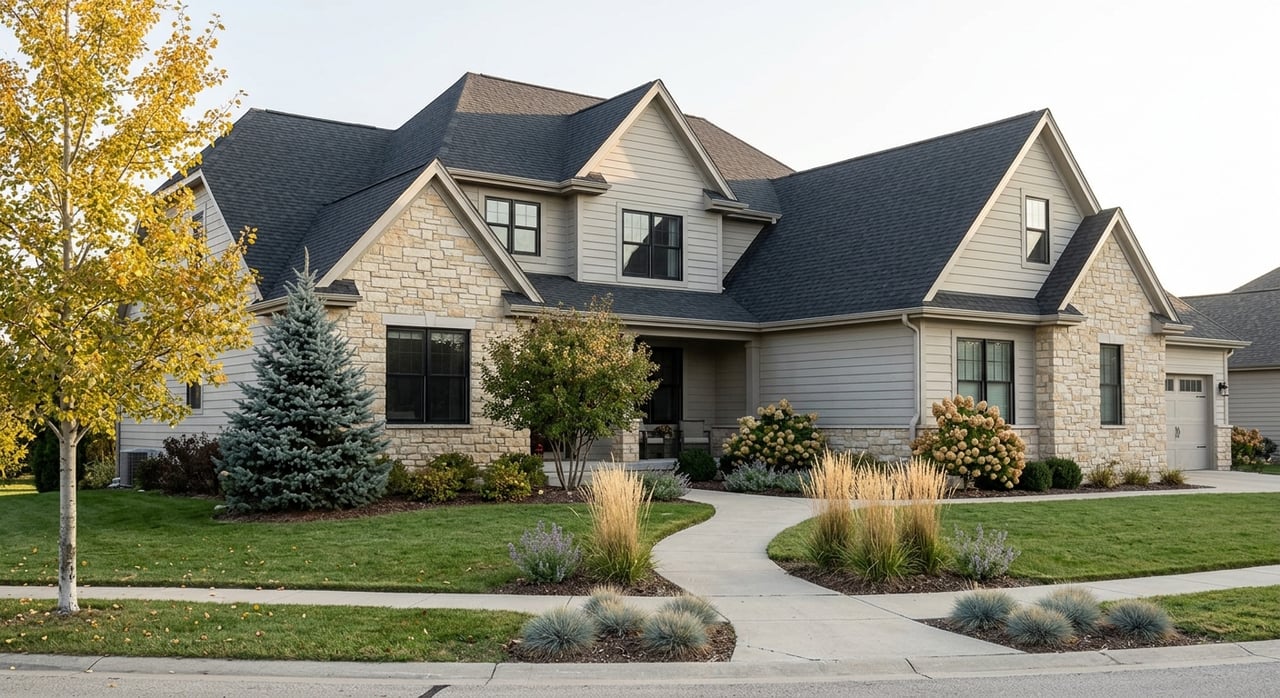
Parker vs Castle Rock Homes: Choosing the Better Fit
May 21, 2026
May 21, 2026
Trying to choose between Parker and Castle Rock? You are not alone. For many South Denver buyers, these two Douglas County suburbs can look similar at first glance, especially if you are relocating or moving up and want more space, strong amenities, and a comfortable suburban lifestyle. The good news is that this choice often comes down to fit more than price, and once you know what matters most to you, the decision gets much easier. Let’s dive in.
At a high level, Parker and Castle Rock share a lot. Both are fast-growing Douglas County communities, and both have grown by roughly 13% to 15% since 2020. Current Census estimates put Parker at 65,985 residents and Castle Rock at 83,815 residents.
They also sit in a similar affordability range for many move-up buyers. Parker’s median owner-occupied home value is $646,300, while Castle Rock’s is $652,900. Median household income is also strong in both towns, at $133,369 in Parker and $145,197 in Castle Rock.
That means your decision usually is not about finding a dramatic pricing advantage in one town over the other. It is more about how you want to live day to day, how you commute, and what kind of community scale feels right for you.
If you work in or near Denver, commute patterns can shape your daily routine more than almost anything else. Even small differences in location and transportation options can add up over time.
Parker has a transportation setup that stands out for a South Denver suburb. The Town says most of Parker is within RTD, and residents have access to Parker FlexRide, Route PD to downtown Denver, Route 483 to the Lincoln and Nine Mile light rail stations, Park-n-Ride options, and Access-a-Ride.
The Town also says its free Link On Demand service began operating in Parker on April 8, 2026, connecting Parker with Lone Tree and Highlands Ranch. Parker’s mean travel time to work is 26.1 minutes, according to ACS data. If you want a suburban location with some transit backup, Parker has a clear advantage.
Castle Rock is more car-centered. Its Transportation Master Plan says voters opted out of RTD and related taxes in 2005, so the town relies on more limited transit tools, including a taxi voucher program for eligible residents and a transit feasibility study.
Castle Rock’s mean travel time to work is 28.6 minutes. That is not a huge gap on paper, but the bigger difference is lifestyle. In Castle Rock, daily movement tends to revolve more around driving and road access than around transit choices.
If you want to stay a bit closer to Denver or like having more than one way to get around, Parker often feels easier. If you are comfortable with a driving-first routine and do not mind being farther south, Castle Rock can still be an excellent fit.
This is one of the biggest decision points for relocation buyers. In my experience, people often focus on home features first, then realize later that daily logistics shape satisfaction just as much as the home itself.
Both towns offer suburban housing, but the overall development pattern is not exactly the same. That difference can affect how neighborhoods feel and what types of homes you are more likely to find.
Parker’s development standards say the town consists mostly of single-family detached housing. Its multifamily standards are designed to buffer new multifamily near detached neighborhoods, which reinforces that detached-home suburban pattern.
If you picture a classic South Denver suburb with established neighborhood structure, a recognizable downtown, and a strong single-family orientation, Parker fits that image well. For many buyers, that creates a more compact and neighborhood-centered feel.
Castle Rock presents a broader housing mix. The town says buyers can find everything from homes that are more than 100 years old near the center to new construction in many styles and locations. It also notes more than 150 mapped neighborhoods.
Its development activity page says that over the past 25 years, Castle Rock has averaged about 780 single-family homes and 150 multifamily units per year. If you want more variation in neighborhood age, home style, and community scale, Castle Rock usually gives you more to compare.
For buyers who say they want acreage, it is important to set expectations. In both Parker and Castle Rock, larger parcels are generally more common on the edges of town or in nearby unincorporated areas, not in the core suburban neighborhoods.
In the Parker area, Salisbury Estates is described as a large unincorporated area surrounded by Parker and characterized as rural residential, with many parcels under 10 acres and examples in the 3- to 7-acre range. In Castle Rock, the Pioneer Ranch annexation page says existing Douglas County zoning allows single-family residential development on lots ranging from 2 to 35 acres.
These are examples, not townwide norms. Still, they are helpful if your version of the ideal move includes elbow room, outbuildings, or a more rural edge while staying connected to the southeast metro.
This is where the personality of each town becomes more visible. Both offer parks, recreation, and a downtown core, but they deliver a different day-to-day experience.
Parker describes itself as having a unique Western-Victorian downtown and a hometown feel. Its Mainstreet Master Plan calls downtown the heart of the community, which is consistent with how many buyers experience the town.
Parker’s amenities include the PACE Center, Fieldhouse, Recreation Center, H2O’Brien Pool, and Discovery Park Ice Trail. The town also says it has about 2,252 acres of open space and roughly 44.46 trail miles, and that Rueter-Hess Reservoir is open to the public for recreation.
If you are looking for a suburb that feels a bit smaller, more connected to its central core, and easy to understand quickly, Parker often checks those boxes. It tends to appeal to buyers who want a strong sense of place without feeling too far from Denver.
Castle Rock offers a broader amenity footprint. The town describes Downtown Castle Rock as the community’s heart and points to Festival Park as a major civic space. Town materials also highlight the historic downtown, the Outlets at Castle Rock, and the Promenade.
On the recreation side, Castle Rock says it manages 104 miles of trails, 25 parks, and more than 4,000 acres of open space, with partner access to over 130 miles of trails and over 6,900 acres of open space. Philip S. Miller Park and the Miller Activity Complex are also key parts of the town’s recreation identity.
If you want a larger town with more retail, more recreation infrastructure, and more places that feel like regional destinations, Castle Rock tends to stand out. It often feels like the better fit for buyers who want more variety built into the town itself.
Sometimes the clearest way to make this decision is to match the town to your priorities.
If you are deciding between Parker and Castle Rock, try ranking these four factors in order: commute, home style, town scale, and lifestyle amenities. That simple exercise can quickly reveal which community matches your daily life more naturally.
For example, if commute flexibility and proximity to Denver rise to the top, Parker often wins. If recreation scale, shopping, and neighborhood variety matter more, Castle Rock usually pulls ahead.
The most important thing to remember is this: Parker and Castle Rock are not competing for “best suburb.” They serve different lifestyles. Parker often wins on proximity and transit flexibility, while Castle Rock often wins on scale and variety.
If you are relocating, moving up, or trying to narrow your options in the south metro, having a local guide can make the process much easier. Joni Jagger brings more than 30 years of Colorado experience and a relationship-first approach to helping buyers find the right fit with confidence.
Reach out and connect with Joni Jagger today.