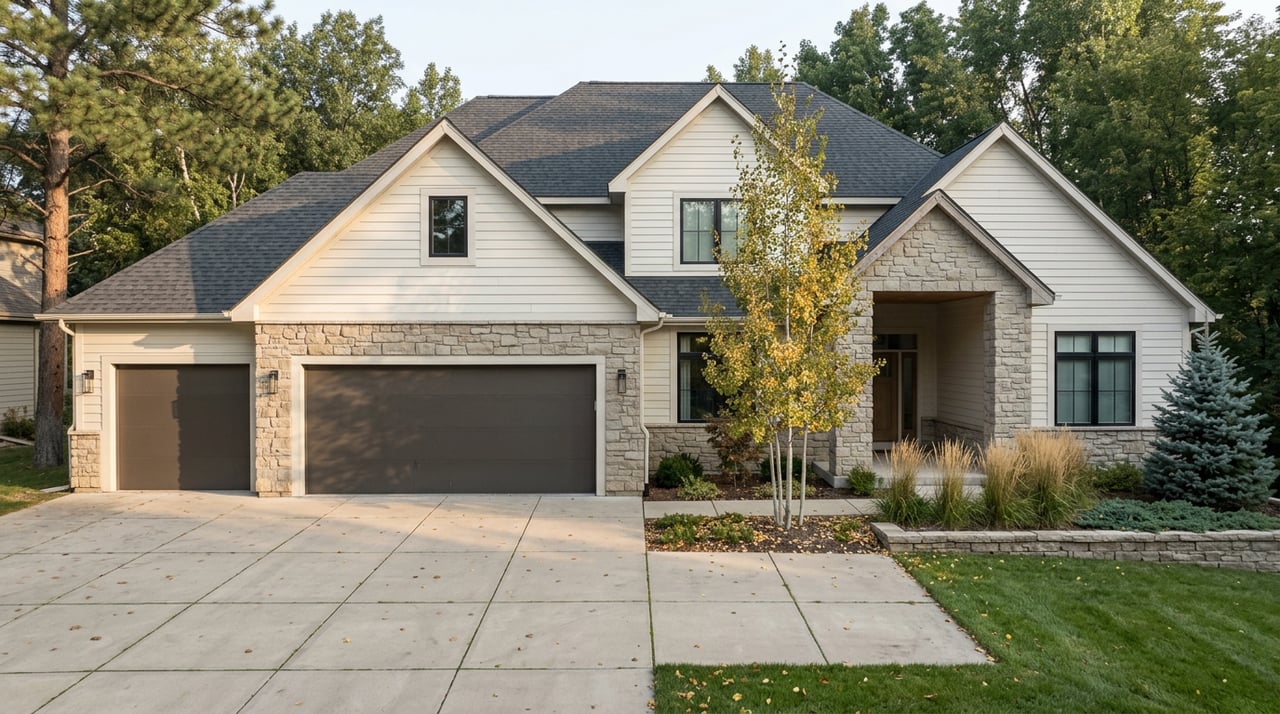
Parker Colorado Metro District Taxes Explained
September 3, 2026
September 3, 2026
What happens when two homes in Parker list for the same price and still hand their new owners two completely different property tax bills?
It happens more often than most buyers realize, and it isn't just about the home itself. As of August 2026, Parker homes were listing at a median of $711,000, spending a median of 59 days on the market, about the same pace as August 2025. That's not a market moving too fast to think clearly. Buyers have room this year to ask questions before they sign. One important part of a home's monthly cost is the mill levy tied to its parcel; in Parker, it can vary from block to block.
Most people compare Parker homes the way they'd compare anything else: price, square footage, school assignment. But a meaningful share of what a Parker buyer pays every month depends on which metropolitan district, if any, was formed under the parcel before the home was ever built.
A metro district is a quasi-governmental entity created under Title 32 of the Colorado Revised Statutes. A developer petitions to form one, the district issues bonds to pay for roads, water, sewer lines, and parks, and the homeowners who move in later repay that debt through a mill levy added to their property tax bill. It sits apart from the county, apart from the school district, and apart from any HOA. A neighborhood can have an HOA and a metro district running at the same time, each billing for different things.
The rule of thumb worth knowing: if a Parker subdivision was platted after 2000, has its own pocket parks, and announces itself with a monument sign at the entrance, assume there's a district financing it until county records prove otherwise.
Here's where the comparison actually gets interesting, because age alone doesn't predict which side of the line a neighborhood falls on.
Stonegate is one of Parker's oldest master-planned communities, with development starting in 1986 and continuing through the 2000s. It carries a comparatively modest quarterly fee through the Stonegate Village Owners Association. It also sits inside two metro districts that fund water service and the neighborhood's pools, billed separately through property taxes. Established doesn't mean district-free.
Newer construction tells a different version of the same story. A publicly cited example from Newlin Crossing, a Lennar community in Parker, shows an approximate HOA of $90 a month paired with a sample total tax rate near 1.07 percent for some homes, well above the 0.6 to 0.7 percent range typical of older, established Denver-metro neighborhoods without a district. Tanterra, one of Parker's larger master plans, ties into the Cherry Creek South metro district for its infrastructure financing. And in Parker Homestead Metropolitan District, the governing service plan (approved by the Town of Parker in October 2010) sets a 35-mill cap on the debt-service levy.
| Neighborhood type | Financing structure | What a buyer sees in practice |
|---|---|---|
| Established resale (e.g. parts of Stonegate) | Legacy metro district(s) plus low HOA | Modest monthly HOA, separate district charges for water/pools baked into taxes |
| New construction (e.g. Newlin Crossing) | Active metro district financing infrastructure | Total tax rate near 1.07%, HOA around $90/month |
| Newest development phases (e.g. Anthology, Hess Ranch) | Higher authorized mill-levy cap | Rate ceiling set before ground is broken |
The Town of Parker doesn't set these rates and can't raise them on existing districts. What the Town Council can do, and did in May 2019, is change the ceiling a district's service plan is allowed to reach. That vote raised the allowable mill-levy cap for the undeveloped portion of Anthology and for the new Hess Ranch developments.
Here's the part that catches buyers off guard even after they've heard the word "metro district" a dozen times from an agent or a builder rep.
Early in a district's build-out, the bond payment is fixed but the number of rooftops sharing it is small. That's when the effective rate feels highest. As more homes get built and assessed values climb, the same bond gets divided across a larger base, and the rate can ease. Debt mills can also drop when a district refinances at better terms once its credit profile improves. None of that helps the buyer who closes during phase one. It mostly helps the buyer who closes during phase four.
So the practical takeaway isn't "new construction costs more forever." It's that the newest phase of any Parker development is, structurally, the phase paying the highest effective rate relative to what it will eventually settle into. A buyer comparing two similarly priced new-construction homes in different phases of the same community is really comparing two different points on that curve.
Colorado tightened the paper trail on this exact problem. Mile High Title Guy explains that, for sales closing on or after January 1, 2024, a seller of residential property located inside a metro district organized on or after January 1, 2000 is required to give the buyer the district's official website. Parker Homestead Metropolitan District's own site is a working example of what that disclosure looks like in practice: a public page listing the district's authorized mill-levy cap and the service plan that governs it.
That single link doesn't replace due diligence, but it closes the gap between "I heard there might be a district" and "here is the document that tells me the cap."
The math itself isn't complicated. The work is in finding every mill levy that applies to a specific parcel, because a tax bill stacks the county, the school district, fire, water, RTD, and any metro district into one total.
Three places settle it before you're under contract:
The Douglas County Assessor's office can pull the parcel report, showing assessed value and every taxing district tied to that specific address, not just the neighborhood in general.
The Douglas County Treasurer's office holds the Certificate of Taxes Due and the mill levy history, which is the number a mortgage servicer will eventually use to set your escrow account regardless of what a listing sheet estimated.
The district's own management company, findable through its official website per the 2024 disclosure rule, holds the current budget, the most recent audit, and the debt schedule that tells you whether mills are trending down as bonds get refinanced or staying flat because new debt just got issued.
None of these calls take long. All three, together, tell you more about a Parker home's real monthly cost than the listing price ever will.
Does every new-construction home in Parker sit inside a metro district? Not automatically, but it's common enough in fast-growing Douglas County master plans that the safer assumption is yes until the parcel report says otherwise.
Why does the service-plan cap matter? The Town of Parker has no authority to raise rates on an existing district. The service plan's stated cap is the number worth reading, not the current year's rate alone.
If a neighborhood's HOA fee looks low, does that mean it's the cheaper option? Not on its own. A low HOA paired with an active metro district, like the structure in parts of Stonegate, can still add up to a comparable or higher total monthly cost once the tax-bill portion is included. The HOA fee and the mill levy have to be read together, not separately.
With homes sitting on the market for closer to two months rather than two weeks, most Parker buyers this year have the time to make these three calls before they write an offer. These calls can help buyers compare the full monthly cost. If you're comparing homes across Stonegate, Newlin Crossing, Tanterra, or one of the newer phases near Anthology and Hess Ranch, and want to understand the tax costs tied to a specific parcel before you sign anything, At Home with Joni can walk through the details with you.
This article is general information, not legal, tax or financial advice. Consult a qualified professional about your situation.


Reach out and connect with Joni Jagger today.